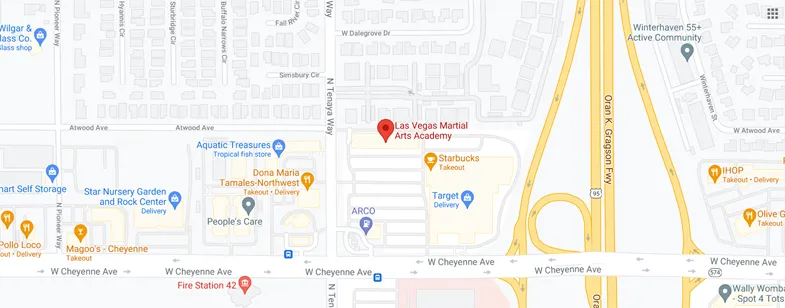
LAS VEGAS MARTIAL ARTS ACADEMY
Taekwondo, Judo, Kali, Silat, and Armas
CLASSES
Taekwon-Do
Taekwondo is a dynamic Korean martial art renowned for its high, fast kicks, agility, and powerful strikes. The official name "Taekwondo" was developed in the 1940s and 1950s and officially adopted on April 11, 1955.

What does Taekwon-Do mean? "tae" meaning to kick with the foot. "kwon" means to punch or strike with the hand. "do" means art or way. Therefore, Taekwon-Do translates to "the art of kicking and punching." Its physical aspects come from the kicking and punching, while its spiritual aspects come from the art.
Beyond self-defense, Taekwondo is deeply rooted in character development. Practitioners are guided by five core tenets:
- Courtesy
- Integrity
- Perseverance
- Self-Control
- Indomitable Spirit
ⓘ We teach kids(starting at age 5yo) and adults.
Judo
Judo has been around for 144 years. It was officially created in Japan in 1882 by Kanō Jigorō, who adapted ancient forms of jujutsu into a modernized martial art focused on physical, mental, and moral education.

What does Judo mean? "Judo" means "gentle way" or "the way of gentleness" in Japanese, and it's a martial art and sport a modern Japanese martial art and combat sport founded in 1882 by Kanō Jigorō. It emphasizes using an opponent's momentum and leverage against them rather than relying on brute force.
ⓘ We teach kids(starting at age 8yo) and adults.
Kali
In the martial arts industry, "kali" is an umbrella term for all Filipino Martial Arts (FMA), encompassing weapon-based fighting with sticks, knives, and other bladed weapons, as well as "open hand" techniques.

What does "Kali" mean? The name "Kali" is believed to be a portmanteau of the Cebuano words Kamot (hand) and Lihok (movement). Another widely accepted historical theory links it to kalis, a pre-Hispanic Filipino word for a bladed weapon, which was documented as early as 1613.
Escrima sticks, also known as arnis or kali sticks, are the traditional weapons used in this Filipino martial art. They are typically made of lightweight, durable rattan wood or synthetic polymers, they measure about 26 to 32 inches long and are used for self-defense, striking practice, and sparring.
ⓘ We primarily teach adults but kids starting at age 12yo are welcome.
Silat
"Silat" is a collective word for a class of indigenous martial arts from a geo-cultural area of Southeast Asia encompassing most of the Nusantara, the Indonesian Archipelago. There are over 600 different styles.
Benifts include:
- Improved fitness - Kuntau Silat is a martial art, which means that it requires a lot of physical activities and movement.
- Keeping your mental health - Martial arts requires the refinement of sharp observance for an accurate body coordination and movement precision, the mind must always keep stable and steady both mentally and emotionally.
- Instills Confidence
ⓘ We teach Kuntao Silat as well as Boxing and Self-Defense for kids(10 and above) and adults.
Armas
What is Armas?
"Armas" is not typically a single standalone martial art, but rather the Spanish word for "weapons." The term usually refers to the weapons-based curricula within Filipino Martial Arts (FMA), which encompass stick, blade, and empty-hand techniques.
Our Story
Preserving Filipino Heritage Through Movement
ARMAS was founded on the belief that Filipino Martial Arts are more than systems of combat, they are a living expression of Filipino culture, history, and identity.
For generations, knowledge was passed from teacher to student not only through words, but through movement. Every step, every angle, every transition carries principles refined through experience and preserved through lineage.
Our mission is to honor that tradition while making it accessible to today’s practitioners.
Our Lineage
ARMAS is a lineage branch of Abenir Kalis, carrying forward the teachings, principles, body mechanics, and philosophy of the parent art through its own training methodology.
Under the guidance of Maestro Bong Abenir, ARMAS continues to study and preserve the foundational principles that define Abenir Kalis while developing a structured approach to teaching movement, awareness, and practical application.
We recognize Abenir Kalis as the mother art.
ARMAS exists as one of its expressions.
Our Philosophy
We believe expression begins with understanding.
Techniques may vary.
Weapons may change.
But principles remain.
Rather than collecting countless techniques, we focus on developing efficient movement, timing, awareness, structure, and intent. As these principles become understood, expression emerges naturally.
This is what we refer to as Ancestral Body Language—the ability to communicate knowledge through movement that has been refined and passed down across generations.
Our Training
ARMAS provides a progressive path for practitioners of all experience levels.
Students begin by developing strong foundations in movement, footwork, timing, coordination, and blade awareness before advancing into tactical application, controlled pressure testing, and instructor development.
Training emphasizes:
- Efficient movement over excessive motion
- Principles over memorization
- Awareness over reaction
- Adaptability over rigid technique
Our goal is not simply to teach students how to use a weapon.
Our goal is to help practitioners understand movement itself.
Our Commitment
We approach training with humility, respect, and a commitment to lifelong learning.
We honor our teachers.
We respect all Filipino Martial Arts traditions.
We believe every sincere practitioner contributes to preserving our shared heritage.
At ARMAS, we remain students of the art, carrying forward the principles entrusted to us while sharing them with the next generation.
Honor the Past. Embrace the Journey. Share the Art.